
Compliance without confusion
You get straightforward test results and documentation that matches what municipalities, HOAs, and commercial managers typically request.
Serving Boise, Idaho & surrounding areas
24/7 Emergency Response
Backflow testing in Boise, Idaho
Protect your drinking water, keep irrigation and commercial systems compliant, and get clear documentation from certified testers who know what Boise properties need.
Water-supply protection
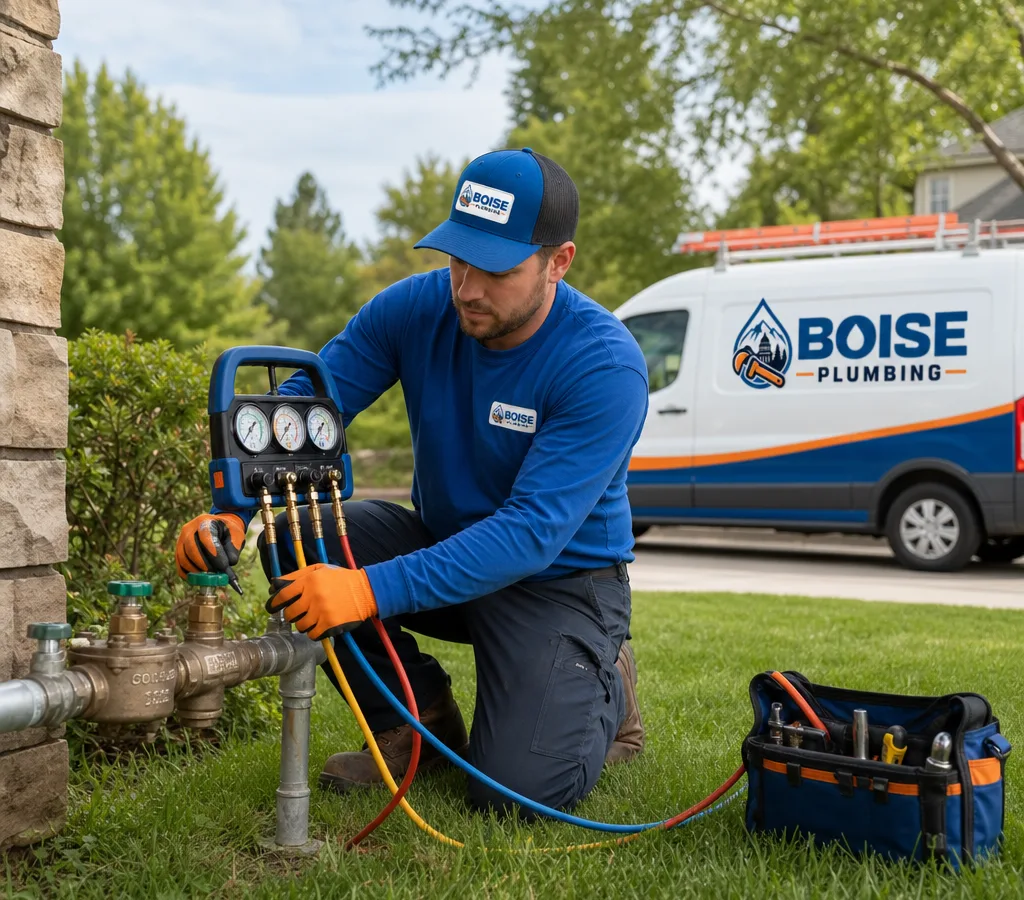
If you are searching for backflow testing Boise Idaho, you are usually trying to do two things at once: protect the water supply and stay current with reporting requirements tied to a backflow preventer on your property.
Backflow preventers are installed where a water line could be exposed to contamination, such as irrigation systems, commercial plumbing connections, or certain equipment tie-ins. The test confirms the device is holding pressure and the check valves and relief components are working as designed.
Boise Plumbing provides Boise backflow testing with the focus you want from a trades team: show up ready, test the device correctly, document results clearly, and explain any failures in plain language. If a repair is needed, you will know what part failed—such as check #1, check #2, or the relief valve—what it means for safety and compliance, and what the next step is.
Measured testing and records
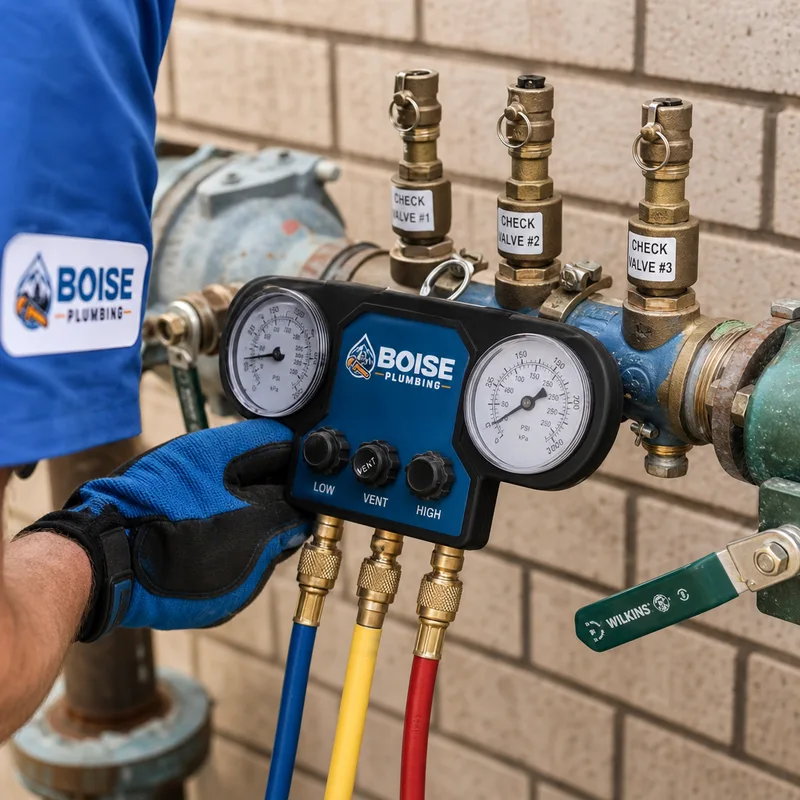
A proper backflow test is more than a quick look at the assembly. It is a measured test using calibrated gauges at the test cocks to verify each component holds the required pressure differential.
During your appointment, we typically:
After the test, you should have documentation that is easy to file and submit when required. If the unit passes, you have a clean record for your files. If it fails, you have a clear repair recommendation based on the actual failure point, not a guess.
If you are also trying to choose an ongoing plumbing partner for Boise properties, start with a crew that handles compliance work carefully. Smaller visits like annual testing let you get to know the team before you ever face an emergency.
Reliable testing outcomes
You get straightforward test results and documentation that matches what municipalities, HOAs, and commercial managers typically request.
Correct device identification, proper isolation, and a complete test sequence reduce avoidable problems that trigger repeat visits.
If a device fails, we explain which internal component failed and what repair or rebuild is appropriate for that assembly.
We regularly find devices in valve boxes with mud, standing water, tight access, or missing test ports. We will explain what should change so future testing is simple.
From irrigation connections at a home to assemblies serving tenant spaces or equipment feeds, the approach stays consistent: safe, measured, and documented.
Planning your test
Backflow testing in Boise typically runs about $75 to $175 for a straightforward, accessible residential device, while commercial sites or hard-to-access assemblies more often land around $150 to $300+. Price depends on device location, vault or box access, the number of assemblies, required shutdown coordination, and whether the unit fails and needs a repair quote.
The exact cost is confirmed once we identify the device or devices on-site and verify access and test conditions.
How service works
A measured sequence verifies the assembly, records the results, and leaves you with clear next steps.
We start by finding the assembly, verifying it is testable, and making sure we can isolate it safely without unexpected impacts to your building or irrigation zones.
Using a calibrated gauge set, we test check valves and relief operation when applicable and record results the way certifying agencies expect.
You get a clear pass or fail result and supporting readings. If it fails, we explain the failure point and the most practical repair option for that specific assembly.
We deliver the completed test documentation so you can submit it or file it for inspections, property management, or compliance tracking.
Boise device conditions
Backflow devices fail for normal, fixable reasons. The key is recognizing what is going on so you are not stuck in a loop of re-tests.
Freeze damage and weather exposure: Outdoor assemblies and irrigation boxes can take a hit during cold snaps. Cracked bodies, distorted seals, and damaged relief components can turn a routine appointment into a repair conversation.
Buried or flooded boxes: If the box is packed with soil or holds standing water, it can be hard to reach test cocks and shutoffs safely. It also accelerates corrosion on bolts, shutoff handles, and test ports.
Missing or damaged test ports and caps: A missing cap seems minor until accurate gauge connections are required. We will flag anything that makes testing unreliable or unsafe.
Unknown device history: Many properties change hands with no clear record of the last test, rebuild, or replacement. We can still test it, but a neglected assembly may not pass on the first visit.
“They showed up on time, tested our irrigation backflow quickly, and explained the readings in a way I could actually understand. The paperwork was ready the same day.”
“We manage a small commercial building and needed documentation that matched what our compliance file requires. The tech was thorough and didn't rush the test even with tight access.”
Common questions
Most customers schedule backflow testing annually because many water providers and property managers require a current annual test for certain backflow assemblies. The exact interval depends on your device type and the rules tied to your water service or site use, so confirm the requirement for your property and set a repeat reminder.
If it fails, the device needs a repair, rebuild, or replacement before it can pass and be documented as compliant. We will identify which component failed, explain what that means, and provide a clear scope for the correct fix.
Yes, and it is often the most efficient approach for multi-device sites. We will confirm how many assemblies are present and accessible, then document each device separately so your records are complete.
Usually yes, at least briefly, because the assembly must be isolated for an accurate test. We will explain what will be affected before shutting anything down, especially in occupied commercial spaces or buildings with water-dependent equipment.
Make sure the assembly is accessible and not buried, blocked by landscaping, or locked behind a gate without access arrangements. If it is in a valve box, clearing debris and standing water helps the test go faster and reduces the chance of rescheduling.
No. Testing is the verification and documentation step, while repair or replacement is corrective work completed only if the assembly does not pass. The repair plan should be based on the specific failure and the device's age and condition.
Tell us what type of property you have and where the backflow preventer is located, and we will schedule a test, provide clear documentation, and walk you through any next steps if the device does not pass.