Non-invasive locating first
We start with tools and testing before cutting into drywall, flooring, or concrete. The goal is to reduce unnecessary openings and keep restoration work to a minimum.
Serving Boise, Idaho & surrounding areas
24/7 Emergency Response
Leak detection service in Boise, Idaho
Find the source fast with non-invasive diagnostics, clear pricing, and a practical plan to stop the leak before it turns into major damage.
Hidden leak diagnosis
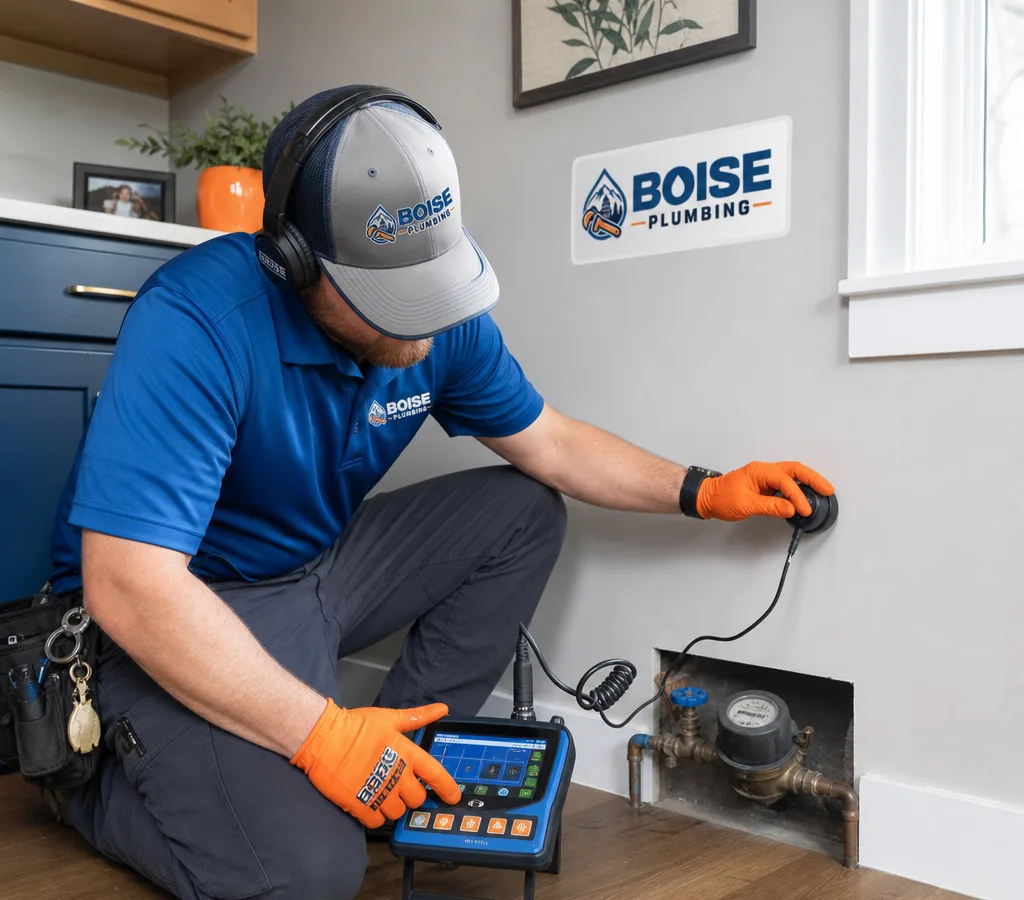
If you are searching for leak detection Boise homeowners can trust, the goal is simple: locate the leak with as little disruption as possible, then give you a clear next step to fix it. Boise Plumbing focuses on pinpointing the source, whether the water is showing up as a wet spot on drywall, warm flooring, a musty smell, or an unexplained jump in your water bill.
Hidden leaks rarely get better on their own. Water can travel along framing, subfloor, and insulation before it shows up, so the visible stain is not always where the pipe is failing. The right approach starts with evidence—pressure behavior, meter movement, moisture readings, and sound—then narrows down the exact area so repairs stay targeted.
We work on leak location for residential and light commercial properties across Boise, with special attention to the common places leaks hide:
Targeted leak location
We start with tools and testing before cutting into drywall, flooring, or concrete. The goal is to reduce unnecessary openings and keep restoration work to a minimum.
You will hear what we found, where we found it, and what we recommend next. If the evidence points to more than one possibility, we will explain why and how we narrow it down.
We can mark suspected paths, isolate zones, and note readings so the repair step is efficient. This is especially helpful if the leak is intermittent or water is migrating.
Boise has a mix of older neighborhoods with aging supply and drain systems and newer construction with PEX and modern fixtures. The method changes depending on the piping and access.
If a leak is near electrical components, in a ceiling cavity, or has caused structural saturation, we prioritize safe access and can advise when drying or restoration should happen in parallel.
Diagnostic methods
Leak detection is part investigation and part measurement. We match the tool to the symptoms and the type of plumbing involved.
Common methods we use include:
In Boise, under-floor and ceiling leaks often show up after daily-use events—showers, laundry cycles, or irrigation timers—rather than as a constant flow. When that is the case, we may ask you to recreate the condition so we can observe the system under normal operating pressure.
If you are also deciding who to hire for the repair after the leak is located, work with a plumber in Boise Idaho who can both diagnose and fix the issue so the handoff is clean and the scope stays consistent.
How service works
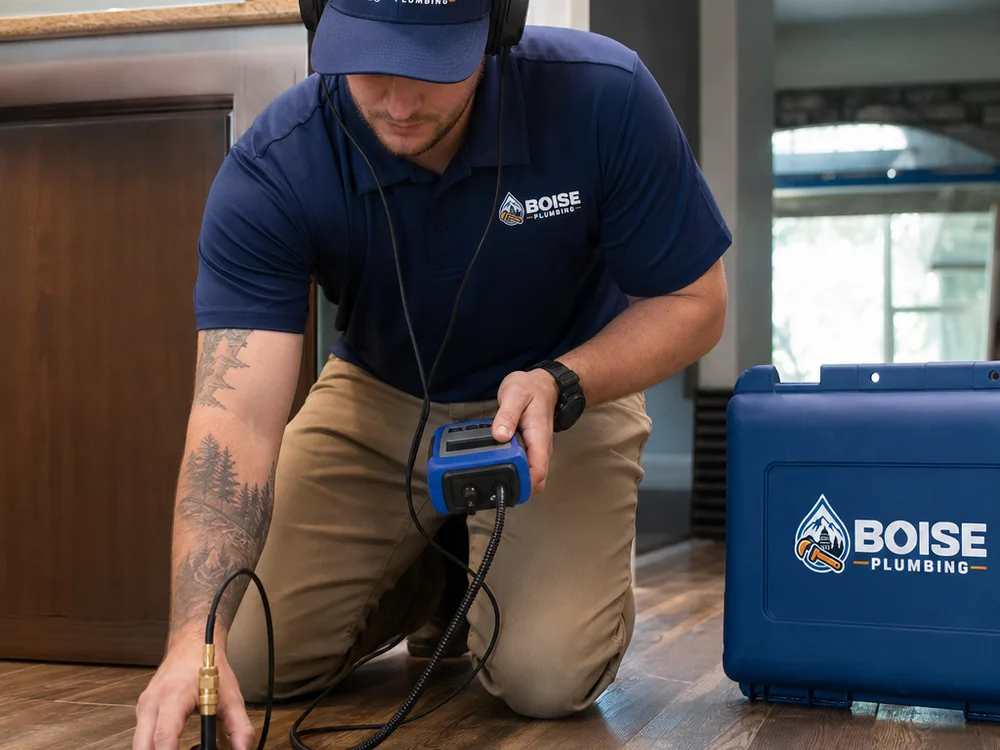
A measured sequence confirms active water loss, narrows the affected zone, and identifies the most probable source before repair work begins.
We start with what you have noticed: where water is visible, when it appears, whether it is hot or cold, and whether any fixtures, irrigation, or appliances correlate with the issue.
We verify whether the system is losing water now through meter movement, pressure behavior, or fixture isolation. This prevents chasing an old stain when the leak is no longer active.
We isolate supply runs, fixtures, and accessible valves to identify which branch is affected. In multi-story homes, we pay close attention to vertical chases where water can travel.
Using listening tools and moisture mapping, we identify the most probable leak location and the path water is taking. We then explain what we recommend opening, if anything, and why.
Once the leak is located, we can discuss repair options, access points, and what should be addressed immediately versus what can wait. If drying or restoration is needed, we will tell you early so you can coordinate.
Planning your service
Leak detection in Boise typically ranges from about $200 to $650, depending on how accessible the plumbing is and whether the leak is continuous or intermittent. Straightforward interior supply leaks that are easy to isolate often fall on the lower end, while under-slab, service-line, or multi-area investigations tend to cost more.
Final pricing is driven by time on site, the need to isolate multiple zones, how finished the surfaces are—tile, slab, or dense insulation—and whether specialized equipment is required. The exact cost is confirmed after we review the symptoms and access conditions at the service visit.
Boise service-area proof
Leaks look different depending on the home and where it sits. In Boise, we regularly help customers when:
Neighborhoods and housing styles can affect access and diagnostic strategy. North End and East End homes often include older plumbing layouts and tighter chases that benefit from careful isolation testing before openings are made. Areas with more recent builds, such as parts of Meridian and Southeast Boise, may have PEX manifolds and clearer branch isolation, which can speed up narrowing the zone.
If the issue involves a broader plumbing concern, Boise Plumbing can discuss repair options after location. The diagnostic step stays the same: prove where the water is coming from before committing to invasive work.
“We had a wet spot spreading in the hallway ceiling and assumed it was the tub drain. They tested and listened first, then showed us it was a supply line in a wall cavity. The repair ended up being a small access opening instead of tearing out the whole surround.”
“Our water bill jumped and we could not find anything obvious. The technician walked us through the meter check, isolated the house, and narrowed it to the line between the meter and the foundation. Having a clear location saved a lot of digging.”
Common questions
In many cases we can schedule leak detection quickly because stopping damage is time-sensitive, and the visit starts with on-site testing and isolation. The timeline depends on access—finished ceilings, slab, or tile—and whether the leak is active when we arrive, since intermittent leaks sometimes require recreating the conditions that trigger them.
Not usually at the start. We use non-invasive methods first, then recommend the smallest practical access opening only when the evidence points to a specific area. If an opening is needed, we will explain exactly where and why before any work begins.
Yes, under-slab leaks can often be located using a combination of pressure testing, isolation, and acoustic tools, then confirmed by targeted access. Because slab leaks can travel before surfacing, the key is narrowing the zone with measurements rather than guessing based on where water shows up.
If you suspect an active pressurized leak, shut off the home's main water valve to limit damage and monitor the water meter if accessible. Avoid running appliances like dishwashers or laundry if you suspect a drain or supply issue in those areas, and use towels or a wet vacuum for standing water only if it is safe around electrical fixtures.
Yes, we handle leak location for homes and many light commercial spaces where plumbing layouts are similar to residential systems. For larger facilities with complex domestic and hydronic systems, we will confirm scope and access needs up front so the right diagnostic approach is used.
A meter test with the interior shutoff closed is often the fastest way to separate the two: if the meter still shows flow, the leak is likely on the service-line side; if it stops, the leak is inside. In Boise, this distinction matters because service-line access and repair planning are different from an interior branch line.
Tell us what you are seeing and when it happens. Boise Plumbing will pinpoint the most likely source, explain the evidence, and outline repair options so you can move forward with confidence.