Right-sized equipment
Softener sizing depends on water hardness and household usage. We match capacity and regeneration settings to the home so you are not under-treating or wasting salt and water.
Serving Boise, Idaho & surrounding areas
24/7 Emergency Response
Water softener service in Boise, Idaho
Get water that feels better on skin, leaves fewer spots on fixtures, and is easier on your plumbing. Boise Plumbing installs and replaces water softeners with clear options, clean workmanship, and straightforward setup.
Hard water solutions
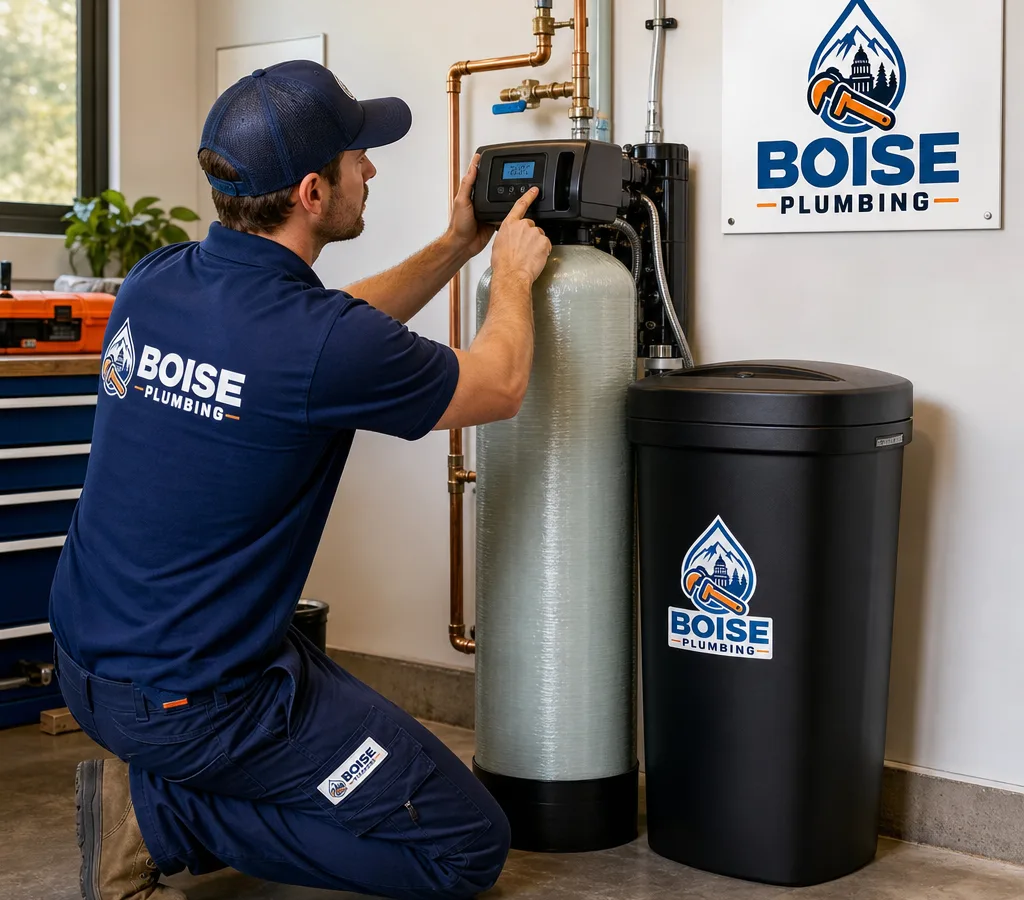
If you are searching for a water softener Boise Idaho homeowners can count on, you are probably tired of scale, cloudy glassware, stiff laundry, and faucets that never look clean for long. A properly sized softener removes hardness minerals—primarily calcium and magnesium—so your water behaves differently throughout the house.
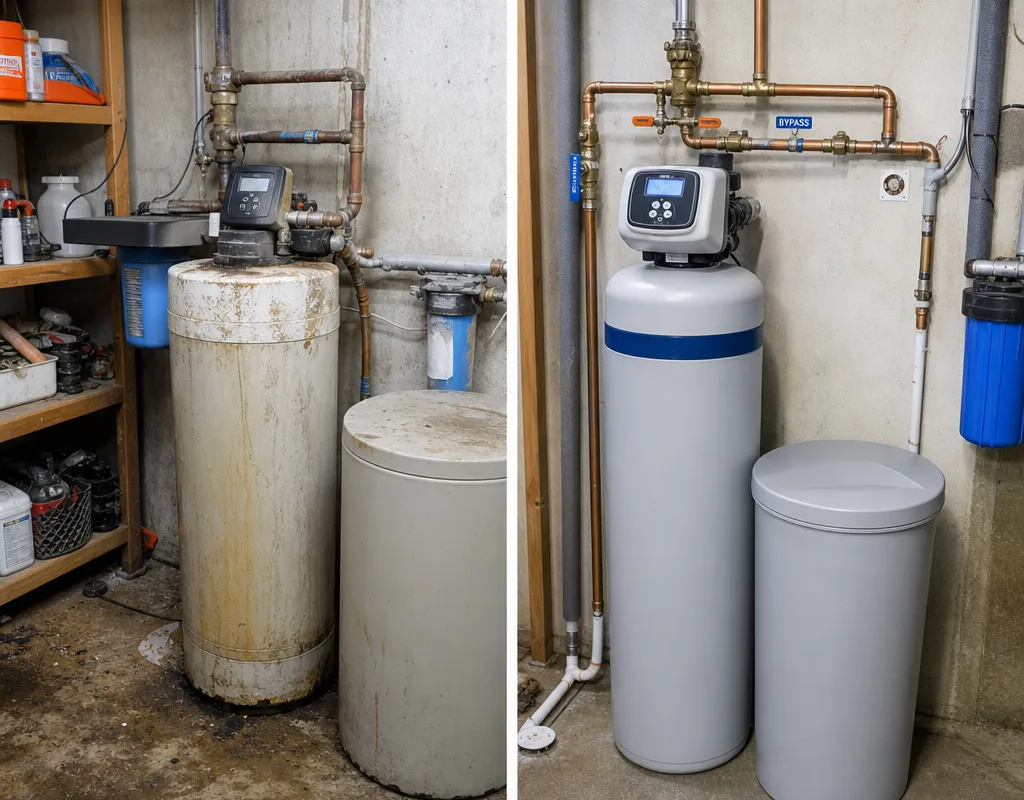
At Boise Plumbing, we help you choose the right system for your household and install it so it performs the way it should: correct sizing, correct settings, correct drain and overflow routing, and a clean tie-in to your main water line. If you already have a softener that is older, leaking, or constantly out of salt, we can replace it and get you back to consistent soft water.
If you need a plumber for other repairs in the home, you can also work with the same team at Boise Plumbing for general plumbing help.
Installation standards
Softener sizing depends on water hardness and household usage. We match capacity and regeneration settings to the home so you are not under-treating or wasting salt and water.
We keep shutoff valves accessible, use proper fittings and support, and leave room for maintenance like adding salt, cleaning the brine tank, and servicing the control head.
Traditional ion-exchange softeners actually remove hardness. Salt-free conditioners work differently and are not a direct substitute for every home. We will explain the tradeoffs in plain terms.
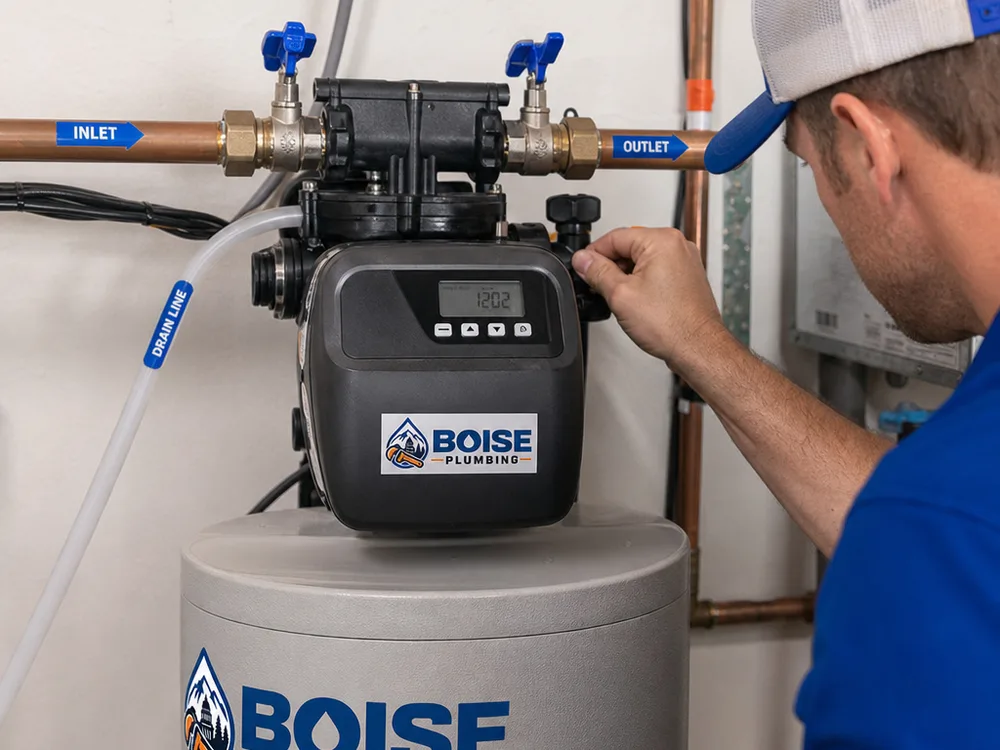
If you are swapping an old unit, we confirm pipe sizing, drain location, electrical needs, and bypass setup so the new softener fits and works correctly on day one.
We verify hardness reduction after installation and show you how to check salt level, set vacation mode, and recognize common alarms or error codes.
Equipment selection
The best water softener is the one that is sized and installed for your home. When people compare brands, they often miss the parts that make the biggest difference in day-to-day results.
First is sizing. Capacity is typically described in grains, but the practical question is how long the system can run between regenerations based on your hardness level and water use. A unit that is too small regenerates too often, burns through salt, and can still allow hard water to break through.
Second is the valve and programming. Modern metered valves regenerate based on water usage instead of a fixed schedule. That usually means more consistent soft water and less waste, but only if the hardness setting and reserve capacity are configured correctly.
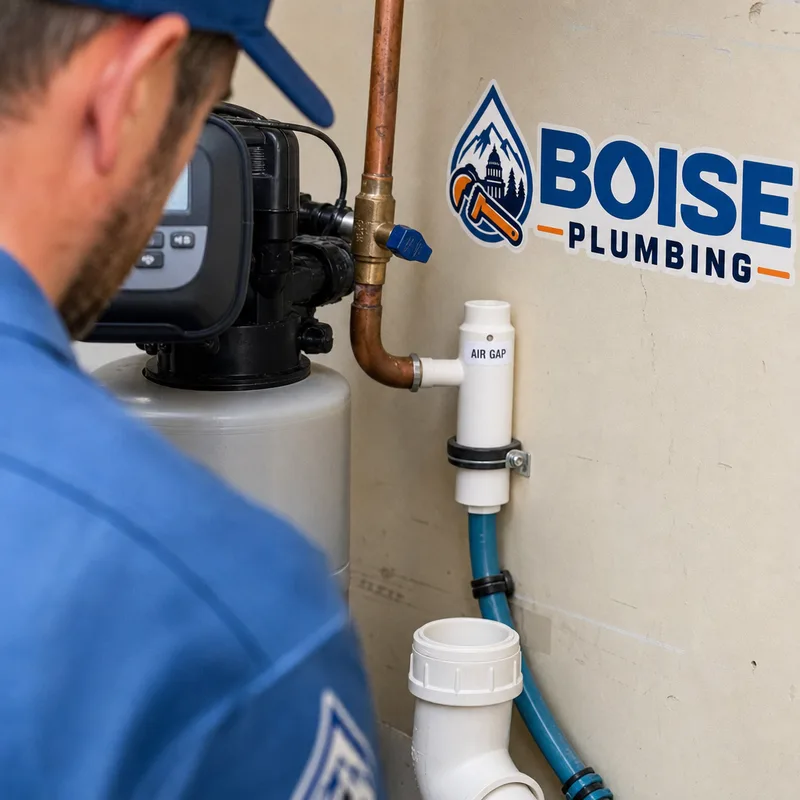
Third is installation detail. A proper bypass, correct drain connection for regeneration discharge, and a safe air gap where required all help prevent messes and cross-connection issues. In many Boise homes, the softener sits in a garage or mechanical space, so we also plan for freezing risk and placement that keeps it easy to maintain.
If you are moving into a home that already has a unit installed, we can inspect it, confirm it is working, and recommend whether it is worth keeping or if replacement makes more sense.
How service works
From placement and sizing to startup, each step is planned for reliable performance and straightforward maintenance.
We look at where the main line enters, available space, drain access, electrical availability, and whether there is an existing loop or previous softener plumbing to reuse safely.
We recommend a capacity and valve type based on your household needs and goals, then outline what is included in the install so you know what you are getting.
We set the unit, connect supply lines and bypass, route the drain correctly, and make sure the brine tank is positioned for easy salt refills and cleaning.
We fill and flush the system, set hardness and regeneration parameters, and check for leaks. We also show you the basic settings you may use over time.
You will know where the bypass is, what type of salt to use if applicable, how to recognize common issues, and when to schedule service if performance changes.
Planning your installation
Water softener installation in Boise typically ranges from about $1,500 to $4,500+ for equipment and professional installation, depending on capacity, valve quality, and the plumbing work needed. A straightforward replacement using existing plumbing is usually on the lower end, while first-time installs—adding a softener loop, new shutoffs, or longer drain routing—cost more.
Your final price depends on system type, household sizing, space constraints, and whether any existing pipes or valves need updates. The exact cost is confirmed after an on-site evaluation of your plumbing and placement options.
If you want softer water without overbuying equipment, start with a quick assessment of your plumbing layout and a written recommendation sized to your household.
Call (208) 330-1217Boise installation details
Common questions
A filter improves taste and can reduce specific contaminants, but it does not remove hardness minerals unless it is a specialized system designed for that purpose. If your main issues are scale buildup, soap that will not lather, or spotty fixtures, a traditional ion-exchange water softener is the standard fix because it removes calcium and magnesium rather than just improving taste.
Most water softener installs take a few hours when the location, drain access, and shutoff placement are straightforward. First-time installs can take longer if we need to add valves, adjust piping for the best placement, or route the drain line to a suitable connection point.
Yes, replacement is common, and we start by checking the existing bypass, shutoffs, and drain routing to confirm they are still safe and compatible. If the old setup is undersized, leaking, or difficult to service, we may recommend small layout improvements so the new unit is easier to maintain and less likely to have problems later.
A water softener is typically installed near where the main water line enters the home, before the water branches to fixtures, and close enough to a drain connection for regeneration discharge. Many homes place the unit in a garage or utility room; we also consider clearance for salt refills, access to the bypass, and protection from freezing temperatures.
No, salt-free units condition water rather than removing hardness minerals the way ion-exchange softeners do. Some homes like them for reduced maintenance, but if your goal is to stop scale and get true soft-water behavior—better lather, softer feel, and less mineral residue—a salt-based water softener is usually the appropriate choice.
Softened water changes how minerals behave in your pipes and appliances, which is often why people install a softener in the first place. During installation we also check that the softener is tied in correctly relative to hose bibs, irrigation lines, and any appliance feeds you may want left on hard water.
Tell Boise Plumbing what you are noticing—spots, scale, dry skin, appliance issues—and where the unit would go. We will confirm placement, recommend the right capacity, and install it cleanly so you get consistent soft water.